


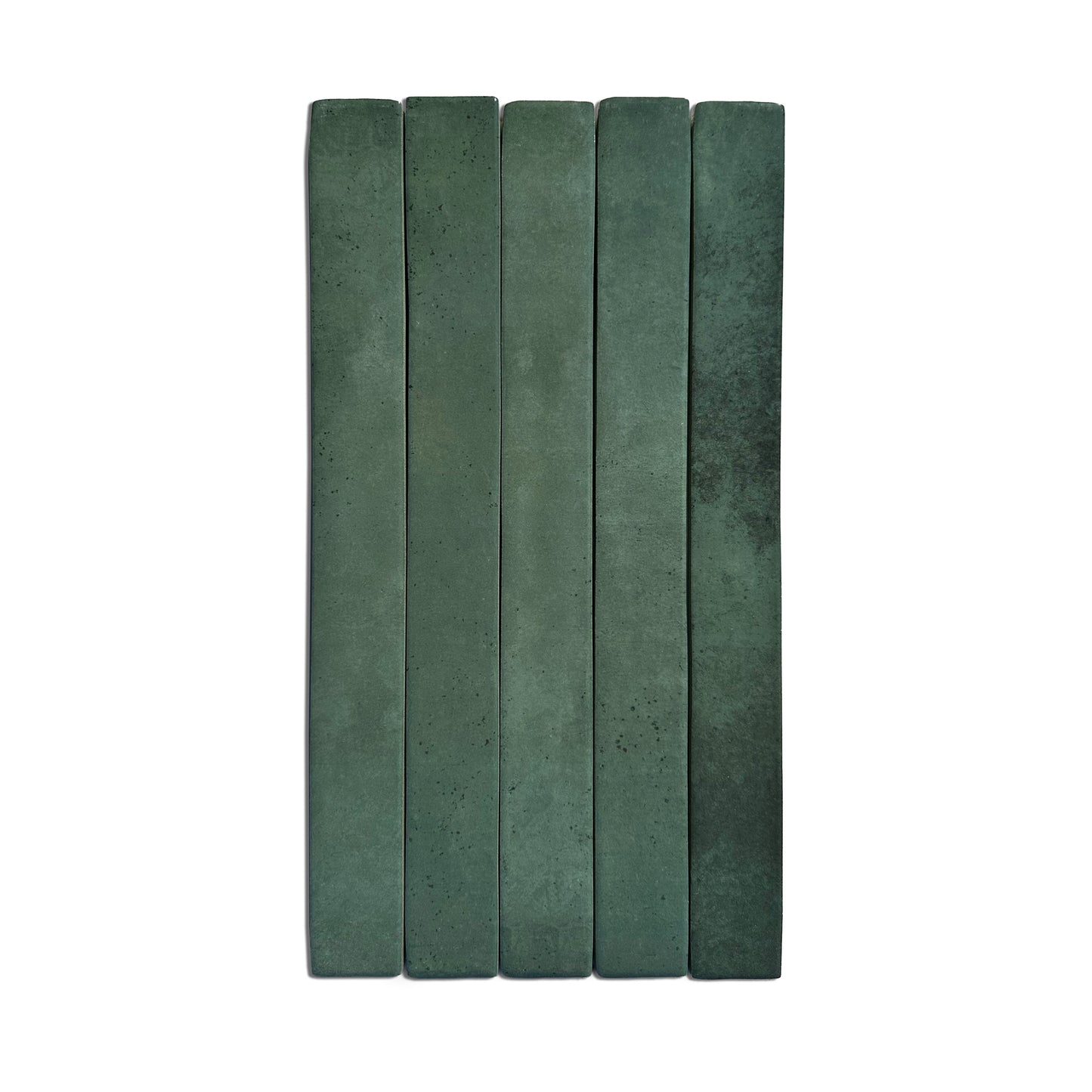
2x18 Long Form Malachite
2x18 Long Form Malachite
Calculate Project Amount
-
-
Total SQFT0
-
Price Per Box$133.56
-
Boxes1
-
$
There are approximately 7.42 SQFT per box.
*Boxes may not be broken. Actual SQFT in this shipment:
Please confirm you have the correct amount before ordering. Refunds or returns will not be issued for over ordering. Learn More
Couldn't load pickup availability

Collapsible content
Details
- Sold by the box
- Material: Porcelain
- Finish: Glossy
- In stock - usually ships in 2-5 business days
- Color variation - Level 2 - slight variation to be expected
- All sizes are nominal +/- 1/8"
Spec Sheet
Application & Usage
- Kitchen Backsplash
- Interior Floor
- Pool Surround
- Interior Wall
- Exterior Wall
- Shower Wall
- Shower Floor
- Exterior Floor
FAQs
TILE ESSENTIALS
Q: What’s the difference between ceramic and porcelain tile?
Ceramic tile is typically softer and more porous, best suited for walls or light-use floors. Porcelain is denser, more durable, and less absorbent, making it ideal for high-traffic areas, wet spaces, and outdoor use.
Q: What does “through-body porcelain” mean?
Through-body porcelain means the color and material composition are consistent throughout the entire tile—not just on the surface—making chips or wear less noticeable over time.
Q: What is honed vs. polished finish?
A honed finish is matte and smooth, offering a softer, more natural look. A polished finish is shiny and reflective, bringing out the color and veining in stone or terrazzo.
Q: Do I need to seal tile?
Porcelain and ceramic tiles generally do not require sealing, but natural stone (like marble or limestone) should be sealed before and after grouting, and resealed periodically depending on use.
Q: What is shade variation in tile?
Shade variation refers to the difference in color or tone from one tile to the next. Some collections are intentionally varied for a natural or handmade look, while others are more uniform. Always lay out multiple tiles before installing to ensure a balanced mix.
Q: What does “V1” or “V4” mean in tile rating?
This refers to the level of shade variation:
V1 = Uniform appearance
V2 = Slight variation
V3 = Moderate variation
V4 = Substantial variation. Higher variation adds movement, dimension and a hand-made look to tile. This may require more thoughtful layout during installation.
Q: Can I use wall tile on the floor?
Wall tiles are often not rated for floor use because they may not be thick or strong enough to withstand foot traffic. Always check the product specs or ask us if a tile is floor-rated.
Q: What’s a rectified tile?
A rectified tile has mechanically finished edges for very precise dimensions, allowing for smaller grout lines and a more seamless look.
Q: What is mesh-mounted mosaic tile?
Mesh-mounted mosaic tile comes pre-attached to a flexible mesh backing, allowing for faster, more precise installation with consistent spacing.
Q: How do I clean and care for tile?
For most surfaces, use a pH-neutral cleaner and avoid anything abrasive or acidic. Regular sweeping or vacuuming and damp mopping will keep tile looking its best.
Q: What does “nominal size” mean in tile?
Nominal size refers to the approximate dimensions of a tile, including the space needed for grout joints. Actual tile sizes may vary slightly due to manufacturing or finishing processes, especially with handmade or natural stone products. Always refer to the listed actual size if precision is needed for layout or coverage.
- Choosing a selection results in a full page refresh.
- Opens in a new window.